
My Joints Are Keeping Me From What I Love
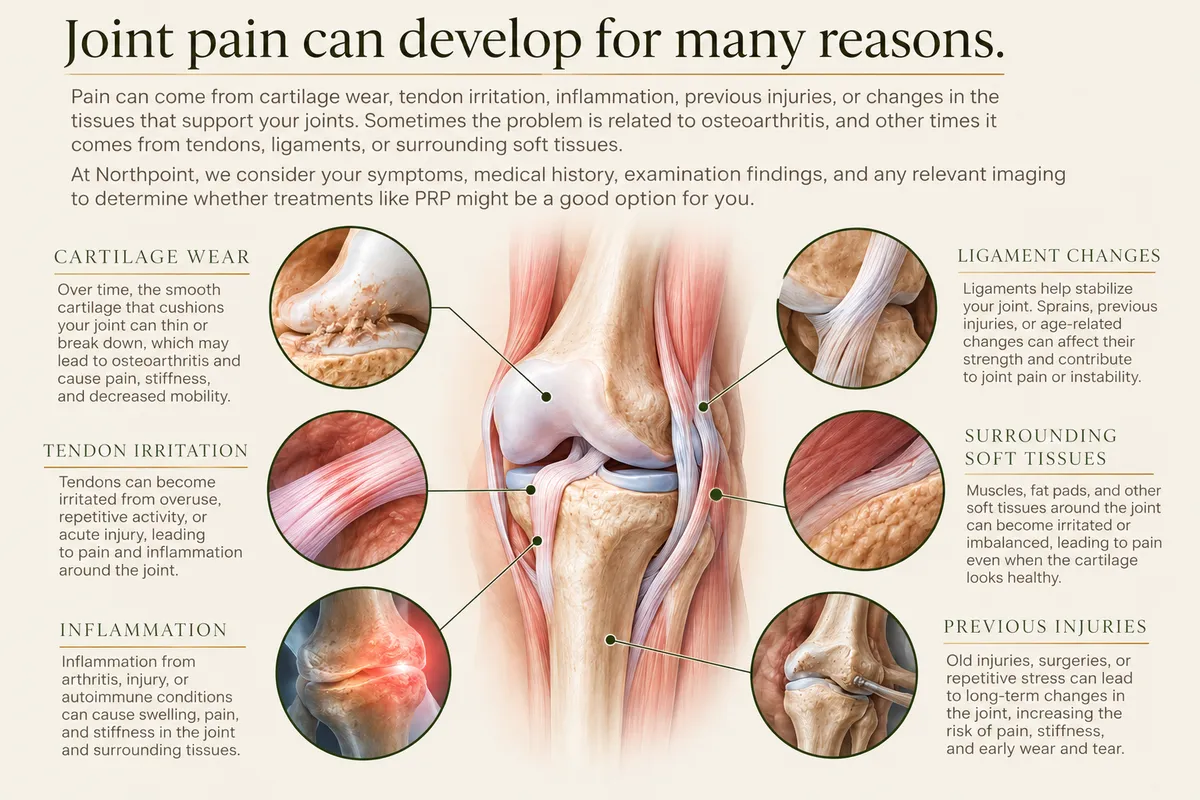
Why do our joints begin to hurt?
How we can help:
Northpoint offers platelet-rich plasma (PRP) therapy for appropriately selected patients with certain joint and soft-tissue conditions.
PRP is prepared from a sample of your own blood. The concentrated platelets contain growth factors and other signaling molecules involved in the body's healing response.
Depending on the diagnosis, PRP may help reduce pain and improve function, although results vary and it cannot reliably regenerate damaged cartilage or reverse advanced arthritis.
Our approach begins with evaluating your symptoms, medical history, and any relevant imaging to determine whether PRP is a reasonable option.
The goal is simple: helping you stay active and continue doing the things you love.

PRP Injections At A Glance:
Treatment
Injection of PRP, spun from your own blood
Typical Appointment
45 minutes
Common Treatment Course
3 sessions
Recovery
Return to normal daily activities promptly
Consultation
Can be done at the time of treatment
Price
$425 for one joint
Joint PRP Q&A
Why do my joints keep hurting?
Joint pain can come from many different sources, including arthritis, previous injuries, tendon problems, inflammation, or changes in the tissues surrounding a joint.
Before recommending treatment, we want to understand what is actually causing your pain.
What is PRP?
Platelet-rich plasma, or PRP, is made from a small sample of your own blood. We concentrate the platelets and inject the resulting plasma into the area being treated.
Platelets contain growth factors and signaling proteins involved in the body's healing response. PRP may help reduce pain and improve function in certain joint and soft-tissue conditions.
Can PRP regrow cartilage?
PRP has not been shown to reliably regrow cartilage or reverse advanced arthritis. However, the evidence does support PRP for certain musculoskeletal conditions.
For knee osteoarthritis, studies have shown that PRP can reduce pain and improve function, with benefits that may last for several months or longer in appropriately selected patients. There is also evidence supporting PRP for some chronic tendon problems, such as tennis elbow and certain patellar and Achilles tendon conditions.
PRP isn't a cure for arthritis, and it isn't right for every injury. Our goal is to use it where the evidence suggests it can meaningfully improve pain and function—not to promise that it can rebuild a damaged joint. How do I know if I'm a good candidate for PRP?
It depends on your diagnosis, the severity of the problem, your symptoms, previous treatments, and sometimes imaging.
We’ll evaluate what’s going on first and tell you whether PRP makes sense—or whether you would be better served by another treatment.
How quickly will I know if PRP is working?
PRP isn't an instant pain-relieving injection. The goal is to influence the body's healing and inflammatory response, so improvement generally occurs gradually rather than immediately.
We'll explain what you can realistically expect based on the condition we're treating.
Ready for your joints to feel better?
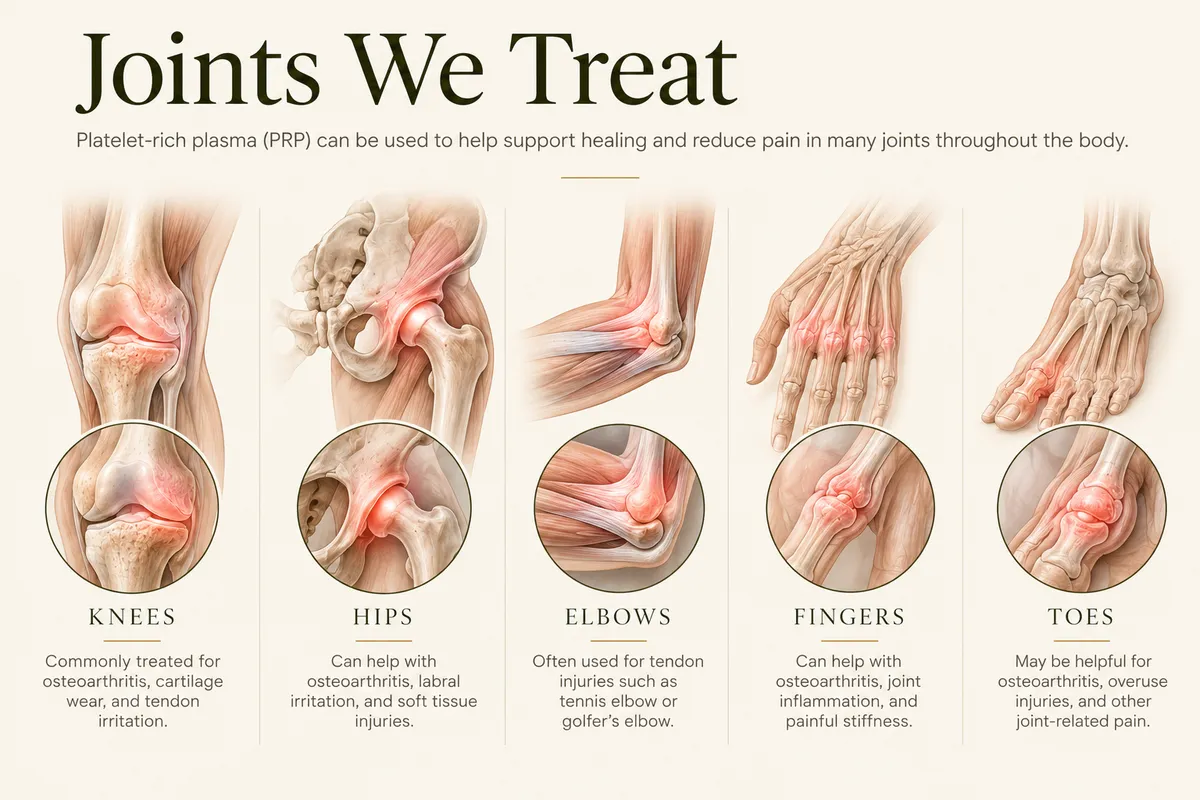
Let’s talk about your joint concerns, your goals, and what you’d like to get back to. We’ll explore whether PRP may be right for you.
What else are you interested in?



11150 Huron Street, Suite 212 Westminster, Colorado 80234

11150 Huron Street, Suite 212 Westminster, Colorado 80234
© 2026 Northpoint Aesthetics. All Rights Reserved.